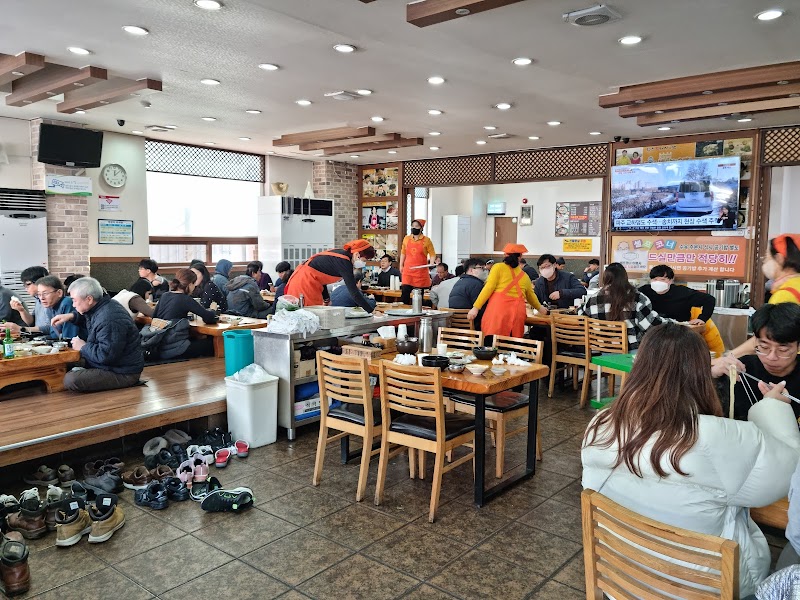
Why a French Gourmet Skipped Paris Cafes for This $30 Spicy-Sweet Busan Milmyeon Feast: Halmae Gaya Milmyeon Head Store
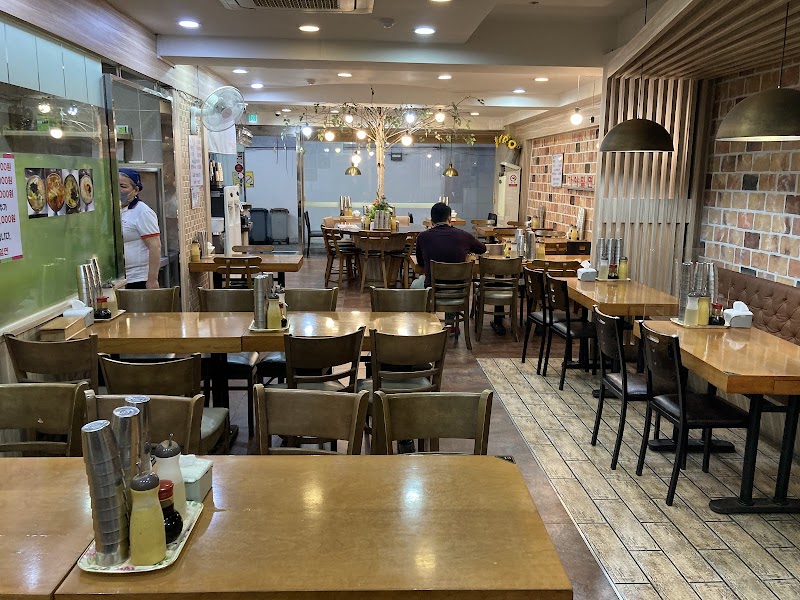

The air in Busan yesterday was heavy and damp, like a fog rolling in off the beach.
Inside a small capsule hotel in Haeundae, I tossed and turned, meticulously planning the next day's culinary pilgrimage.
There was only one destination: a bowl of cold noodles said to condense the city's gritty soul and the history of its refugees. It was Milmyeon.
To think I once recoiled at the writhing tentacles of live octopus and the wild aroma of Dwaeji Gukbap (pork soup). Now, I have transformed into an enthusiast who eagerly seeks out the world of 'gukmul' (broth), ready to explore all it encompasses.
How to Find a Legendary Milmyeon Spot in Busan's Nampo-dong Without a Map
In the bustling heart of Nampo-dong, amidst the flashy signs and crowds, my smartphone's map became useless as soon as I stepped into the backstreets.
The narrow, web-like alleys seemed to test my qualifications as a first-timer, refusing to reveal their secrets easily.
Just as I was about to give up, dizzy from walking in circles, an old woman sorting fish crates silently pointed her finger toward a corner just beyond my view.
I hadn't asked a single question, but it was as if my destination—'Milmyeon'—was written plainly on my face.
This inconvenience, this seeming lack of friendliness, is a kind of credential for a truly authentic nopo (an old, time-honored restaurant).
After all, the best flavors are always hidden in the deepest corners.
Soon, a worn-out sign, layered with the marks of time, came into view. In front of it, a line of fellow pilgrims of taste had already formed, waiting reverently.
But there was no need to worry. The dynamic table turnover, reminiscent of a busy espresso bar in Paris, promised that the wait would not be long.
What's the Secret to Busan Milmyeon's Broth? The Role of 'On-yuksu'
The moment I sat down at a simple aluminum table, a well-worn kettle was served. Inside was a steaming hot broth, or on-yuksu.
I took a light sip and nearly scorched my entire mouth. It was an intense jolt.
I took a moment to contemplate why such a boiling liquid would be served as a precursor to a meal.
Gauging the temperature more carefully, I took another taste and finally understood its profound design.
This broth, exquisitely brewed from bone stock and various traditional herbs, was a perfectly crafted introduction. It acted like a French apéritif to awaken the palate while simultaneously protecting the stomach from the onslaught of cold noodles to come.
The old me, who once detested pork soup, was now naturally getting a refill of this broth. I was becoming fully assimilated into Korea's unique soup culture.
Mul-milmyeon vs. Bibim-milmyeon: A French Gourmet's Guide to Choosing
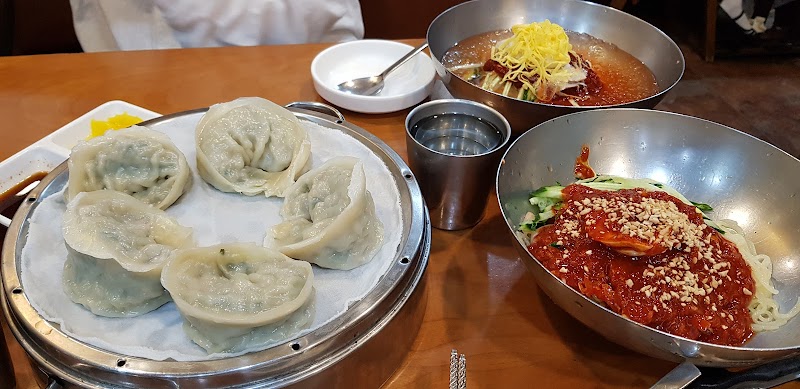
The menu here is extremely concise: Milmyeon, and mandu. That's it.
This simplicity is a testament to the master's decades of expertise and deep-seated confidence.
As an analytical food enthusiast, I couldn't confine myself to a single option. I decided to order both the Mul-milmyeon and Bibim-milmyeon for a comparative analysis.
Mul-milmyeon: A Clear, Deep Broth Reminiscent of French Consommé
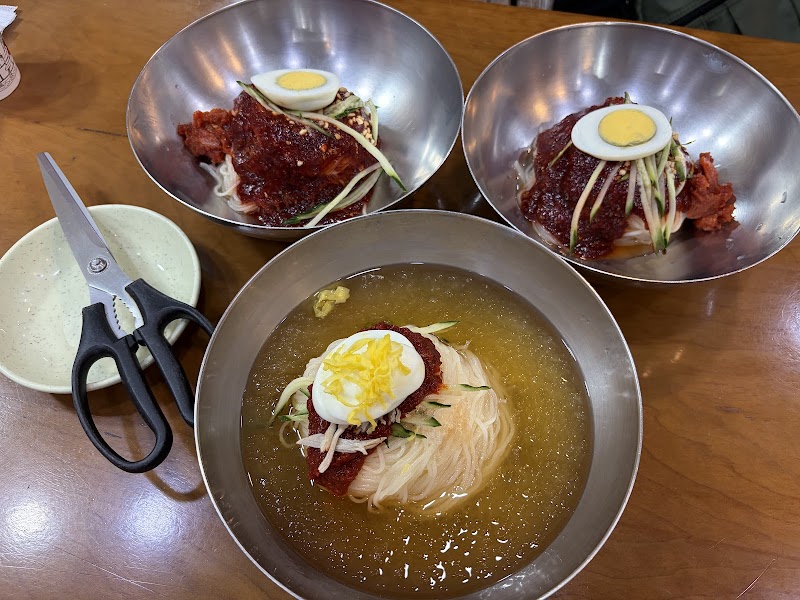
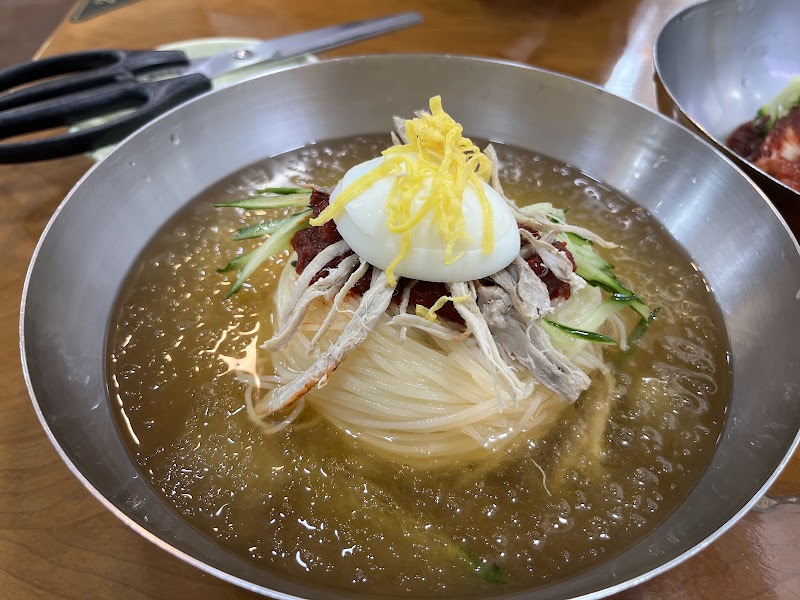
When the Mul-milmyeon arrived, with shards of ice floating on top, I lifted the bowl without hesitation and took a large gulp of the broth.
The moment the cold liquid hit my throat, a brain-freezing catharsis washed over me.
This broth wasn't just cold in temperature. The refreshing acidity of dongchimi (radish water kimchi) and the profound umami of the meat stock coexisted in perfect harmony, followed by a subtle, fleeting hint of oriental herbs.
It shares a certain philosophy with a traditional French consommé, which is clarified through a long, meticulous process to achieve a pure, deep essence.
The elasticity of the noodles offered a physical resistance on a completely different dimension from Italian al dente pasta. It was the ideal balance—chewier than somen noodles, yet snapping more softly than buckwheat naengmyeon.
Adding vinegar and mustard was an interesting chemical variation, akin to adding sugar to an espresso, elevating the flavor spectrum to an entirely new level.
Bibim-milmyeon: A Symphony of Spicy, Sweet, and Savory in a Red Sauce
The intense red visuals of the Bibim-milmyeon were initially striking, but one taste revealed my apprehension was unfounded.
This was not the violent, tongue-numbing heat of chemical capsaicin. It was a sophisticated layering of natural sweetness from fruit, a sharp kick from chili powder, and the nutty aroma of sesame oil.
The precise balance of spicy, sweet, and salty felt as meticulously calculated as the textures in a well-designed French dessert.
One minor technical flaw was that the bowl's diameter felt a bit small for the volume of noodles, creating a risk of splattering the sauce. But this, too, was part of the fun of adapting to the local way.
Notably, the chewy texture of the marinated skate wing (gaori-hoe-muchim) on top offered a brilliant gastronomic counterpoint, comparable to the delightful resistance of escargots cooked in butter and herbs.
Why You Should Always Order Mandu with Your Milmyeon
Let me state this plainly: ordering the mandu is mandatory.
Excluding mandu from a milmyeon meal is like omitting the croissant from a Parisian breakfast. It’s simply not done.
The king-sized mandu here are, without a doubt, top-tier within the category of Asian ravioli. The skin is so thin you can see the filling, yet it’s robust enough to contain the explosion of savory juices inside, with none of the raw floury taste.
The filling's ratio of pork, chives, and tofu delivers a clean, deep, and savory flavor without any gaminess, much like a French pâté or terrine.
The dramatic temperature contrast that occurs when the cold Mul-milmyeon broth meets the hot mandu filling in your mouth is a truly fascinating culinary experience.
While a full plate might seem daunting for a solo diner, the most artistic finale to this meal is to crush the leftover mandu into the remaining bibim sauce and mix them together.
The Perfect Pairing for Spicy Milmyeon: Busan's Daesun Soju
Drinking Daesun soju finally helped me understand the essence of why Koreans pair this clear distilled spirit with hot and spicy foods.
Brewed with natural bedrock water, it was incredibly smooth with a crisp finish. This neutral character perfectly cleanses the palate, cutting through the powerful flavors of the bibim-milmyeon and the richness of the mandu.
It works a kind of magic, making every new bite feel as fresh and exciting as the first one.
Of course, it's difficult to leisurely enjoy a food pairing amidst the rapid pace of a *nopo*.
But this very dynamism felt like a unique cultural ritual, a way to directly absorb the vibrant energy of the port city of Busan. This meal was more than simple caloric intake; it was the act of fully digesting the history and local culture of Busan itself.
A One-Day Busan Milmyeon Tour: Itinerary and Total Cost
While the experience in Nampo-dong was undoubtedly the peak of my pilgrimage, I managed to cover several of Busan’s hallowed milmyeon grounds in a single day. Here is the raw data from that intense culinary journey.
- Gaegeum Milmyeon, 1 bowl of Bibim-milmyeon: ₩9,000
- Choryang Milmyeon, 1 bowl of Bibim-milmyeon: ₩6,500
- Choryang Milmyeon, 1 plate of King Mandu: ₩6,500
- Gukje Milmyeon, 1 bowl of Mul-milmyeon (large): ₩10,000
- 1 bottle of Daesun soju for pairing: ₩4,500
- Busan Metro 1-Day Pass: ₩5,000
Total: ₩41,500
The Bottom Line: For the price of a single dessert at a Parisian café, I experienced a complete, multi-course Korean 'Maep-Dan-Jjan' (spicy-sweet-salty) assemblage of cold broth, spicy sauce, and a shot of soju. This, I'm convinced, is the essence of true gastronomic value and rationality.