Busan Sasang's Hapcheon Ilryu Pork Rice Soup: A Perfect Soju Pairing Rivaling Bordeaux Wine

The sky over Busan was a blanket of gray all day yesterday.
From my window in Haeundae, the sea was as calm and subdued as a monochrome ink wash painting.
When weather like this persists, my gastronomic DNA instinctively begins to crave a hot, deep broth.
A pleasant impulse arises, a feeling that I should escape the polished formalities of fine dining and head somewhere teeming with raw, untamed energy.
My mind was pointing to a single destination.
What to Expect at Busan's Hapcheon Illyu Dwaeji Gukbap: An Honest First Impression
The air in the market alley near Sasang Station is thick with a uniquely complex and potent aroma.
And at its heart is the heat from earthenware bowls that never seems to cool, 24 hours a day.
The moment I open the door, the funky scent of pork bone broth and the sharp, assertive aroma of minced garlic aggressively take over my senses.
If I had encountered this intense fragrance when I first came to Korea, I probably would have backed away.
But now, to me, this smell is no different from the earthy, profound aroma of a well-aged French Époisses cheese.
It’s a gateway, of sorts, into a world of authentic flavor.
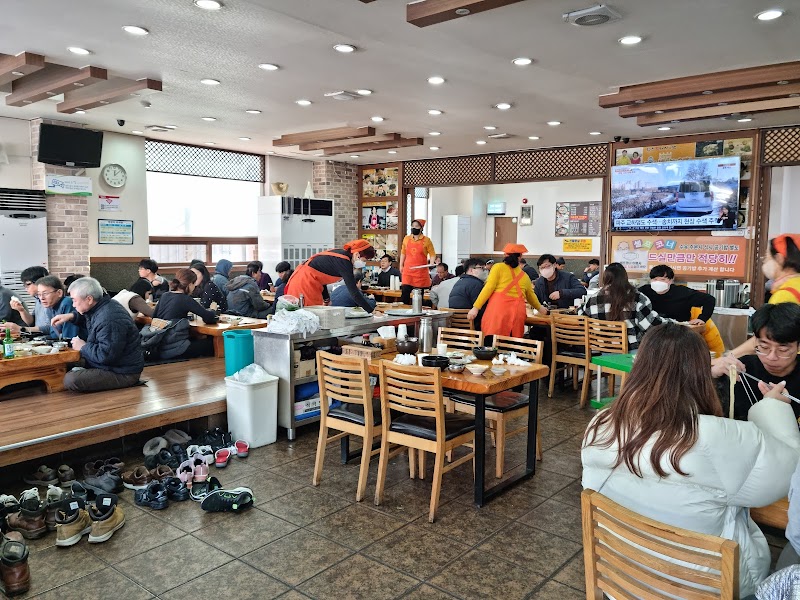
Inside, the place is nearly full, regardless of whether it's a weekday or weekend.
The narrow gaps between tables, the boisterous sounds of conversation, and the busy movements of the "imonims" (aunt-like female servers) immediately catch my eye.
It’s strangely reminiscent of the characteristic energy of an old bistro tucked away in a Parisian alley.
While it’s far from modern comfort, I’m convinced that this noise and density are the most honest testament to the quality of the food.
Spotting me alone, an imonim tapped my arm and naturally guided me to a shared spot in the corner.
"Student, sit here."
The magic of turning a 34-year-old French guy into a fresh-faced student in an instant—this is the endearing charm of a Korean market restaurant.
Hapcheon Illyu Gukbap Menu: Dwaeji-udong vs. Suyuk-baekban?
The menu here is simple, but its straightforward composition holds a clear culinary philosophy.
While a basic bowl of gukbap is excellent on its own, I opted for two different dishes to analyze the potential of this deep broth from multiple angles.
I chose the Dwaeji-udong and the Suyuk-baekban.
This decision was my personal food pairing strategy, designed to simultaneously appreciate a dramatic variation in carbohydrates and the pure texture of the protein.
Dwaeji-udong: The Perfect Gateway for Gukbap Novices
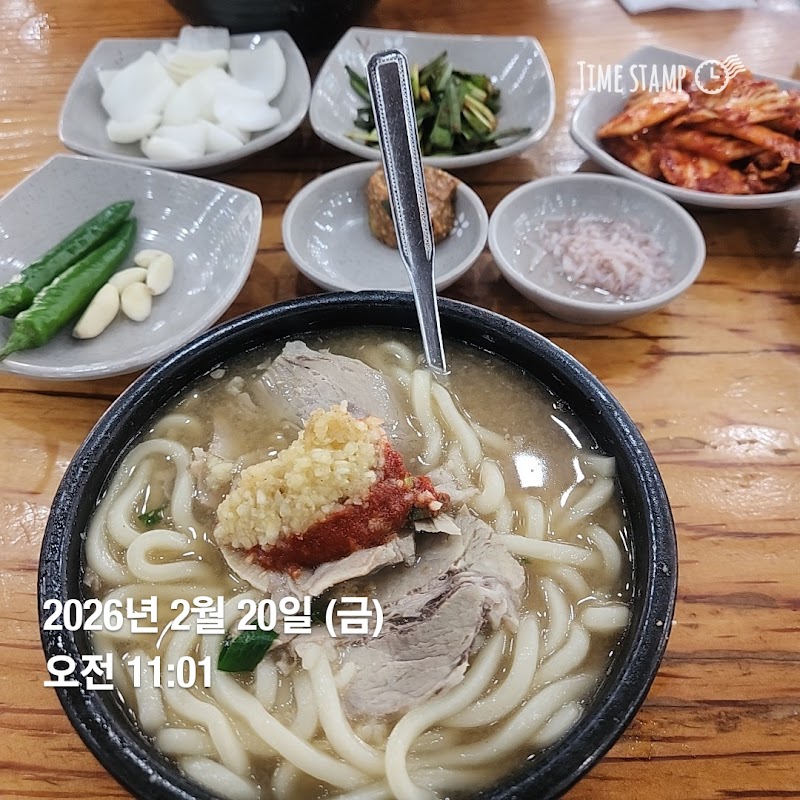
The dish arrives with a vibrant island of red dadaegi (spice paste) and pungent minced garlic resting atop the milky pork broth.
If a French Pot-au-feu aims for a clear, refined, and orderly taste, this earthenware bowl brims with an untamed, wild vitality.
The thick udon noodles rapidly absorb the hot soup.
This provides a textural pleasure that is on a completely different plane from the Italian concept of al dente; it's a soft, weighty, and deeply satisfying experience.
The rich pork broth permeates the noodles so thoroughly that the udon itself becomes a complete, well-executed main dish.
It serves as an excellent gateway for introducing the unfamiliar genre of gukbap to my foreign colleagues who are more accustomed to noodle dishes, offering the least resistance.
Suyuk-baekban: The Art of Deconstruction and Balance
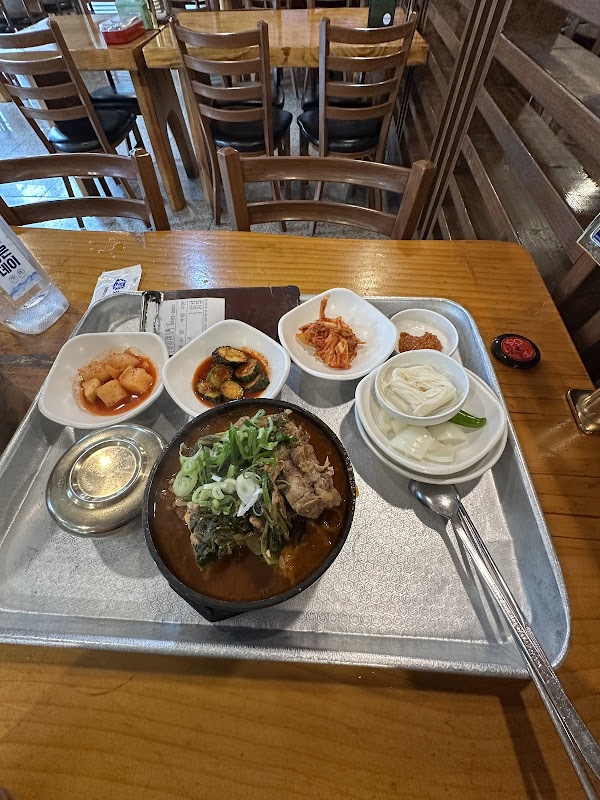
The Suyuk-baekban presents the hot broth, fluffy rice, and boiled pork slices (suyuk) in separate, independent bowls.
This is a delicate consideration that allows you to perfectly control and individually appreciate the unique temperature and texture of each component.
The moment a slice of the well-boiled pork enters your mouth, you experience a supreme tenderness comparable to a classic French braise that has been slow-cooked with immense care.
Like a recipe from the master of French cuisine, Escoffier, the precise golden ratio of fat to lean meat maximizes the savory juices.
When you pair this with the slightly sweet and spicy mu-malangyi (dried radish kimchi), the richness of the pork is perfectly cut, clearing a new space on your palate for the next bite.
The Best Soju to Pair with Dwaeji Gukbap: Daesun vs. Joeun Day
From a gourmet's perspective, I can state with certainty that this hot broth without soju is an incomplete work.
The ultimate pairing is achieved only when the deep, savory, and greasy flavor of the soup harmonizes on the tongue with the clean bitterness of cold alcohol.
To systematically analyze this fascinating mariage, I ordered and compared Busan's two representative local soju brands: Daesun and Joeun Day.
Daesun Soju: A Dry Partner to Cut Through the Richness
As a chilled shot of Daesun soju goes down, its clean, dry alcoholic touch instantly erases any lingering oiliness in the mouth.
This creates a cyclical structure where the hot, heavy meat broth then refills that cleansed palate.
This dynamic—a dramatic contrast of cold and hot, the clash between the sharpness of alcohol and the richness of the broth—is reminiscent of a heavy red wine pairing from France's northern Rhône region.
Daesun's bitter finish has a strong pull, instinctively making you crave the next spoonful of soup.
Joeun Day Soju: A Supporter that Softens the Intensity
Joeun Day, on the other hand, has a distinctly smoother and more delicate texture.
Thanks to its lower alcohol content and gentle passage, it doesn’t clash with the intense flavors of garlic and spice paste or the richness of the pork fat. Instead, it blends in naturally.
It faithfully plays the role of a steadfast supporter, rounding out the overall flavor profile from behind the more direct sensory stimuli.
This excellent balance acts as a superb pacemaker, so effective that it can easily lead to unintentional overindulgence.
A middle-aged gentleman at the next table, who had been observing the two soju bottles on my table, smiled.
"Wow, this guy knows how to drink."
In that moment, he gave me a slight nod and a thumbs-up, and the feeling of pride was indescribable.
It felt as if I had been acknowledged not as a foreigner, but as a true comrade who fully understands this deep, authentic Korean flavor.
3 Essential Tips for Visiting Hapcheon Illyu Dwaeji Gukbap
How to Use the Chives from the Self-Serve Bar
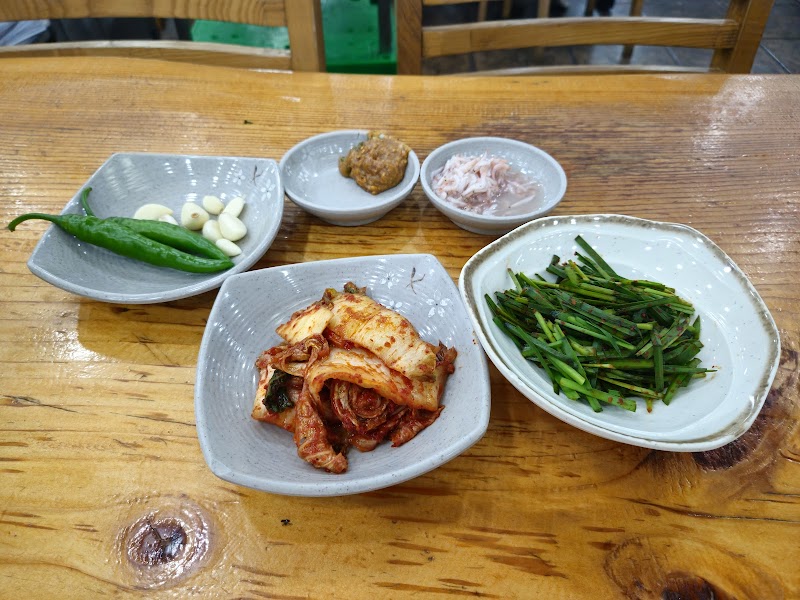
At a self-serve bar on one side of the restaurant, fresh chives (*jeonggak*) and spicy kimchi are generously provided.
These chives are the quintessential Korean garniture, completing both the plating and the balance of flavors.
Instead of eating them raw, the proper technique is to grab a large handful and plunge them into the boiling hot broth in your bowl to wilt them slightly.
The chives, softened by the heat, add an aromatic freshness to the broth and introduce a bright accent to what could otherwise be a heavy pork soup.
This is precisely analogous to how French chefs use fresh herbs at the final stage of cooking to add a 'kick' to a dish.
The Protocol for Requesting a Free Broth Refill
The udon noodles in the Dwaeji-udong are quite starchy and absorb the broth faster than you might expect.
As a result, if you're slowly enjoying your meal with soju, you might find yourself running low on soup.
When this happens, don't panic. Simply ask one of the staff members politely for a broth refill.
When I asked in my slightly clumsy Korean, "Imonim, can I please have some more broth?" she cheerfully refilled my bowl to the brim with hot, rich soup.
It’s a touching moment where the incredible value of gukbap as a drinking companion and the warm generosity of Korean hospitality come together.
Preparing for the Unavoidable Garlic Aftermath
The base broth here is built on an unapologetically direct and powerful garlic flavor.
Even long after you've finished your meal, a significant garlicky aroma will linger in your mouth and on your breath.
Personally, I don't see this as a flaw. I consider it a badge of honor—the most wonderful expression of the originality this brand has maintained for decades.
As long as you don't have an important business meeting scheduled immediately after your meal, all you need is the willingness to embrace this charmingly potent afterglow.
Hapcheon Illyu Dwaeji Gukbap: Price and Final Verdict
- Dwaeji-udong: ₩9,000
- Suyuk-baekban: ₩11,000
- Daesun Soju: ₩5,000
- Joeun Day Soju: ₩5,000
Total: ₩30,000
The bottom line: For just 30,000 won, this is the most perfect local mariage of hot soup and green-bottle soju, a pairing that leaves you feeling no envy for a French Bordeaux.
The old me, who once recoiled at the sight of Korean Dwaeji Gukbap, has now become an evangelist, spreading the gospel of this beautiful pairing to my friends back home in France.
A humble meal at Hapcheon Illyu Dwaeji Gukbap is more than just a meal; it's a valuable and profound culinary journey into the deepest heart of Korean local food.
This hot, rustic soup is not merely food. It's the very life and soul of the people here, captured in a bowl—a true 'Liquid Soul'.