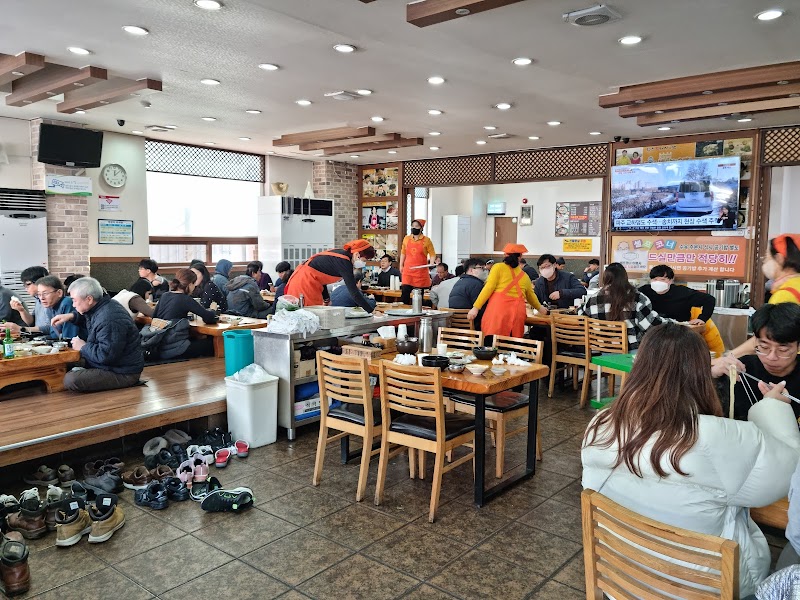
Busan Haeundae Hagfish (Gijang San Gomjangeo): The Shocking Black Dish That Amazed a French Gourmet


Yesterday, the air in Busan was thick, heavily saturated with the dense moisture of the sea.
Staring out the window at the thin veil of sea fog rolling in, I was seized by a sudden, intense craving. I wanted to escape the hyper-curated, delicate plates of haute cuisine and instead seek out the city’s raw, untamed spirit—its unrefined, primal culinary traditions.
True gastronomic exploration often requires us to step into the unpredictable. Only by abandoning our comfort zones can we discover the true depth of a culture's culinary heritage.
As a native of France, my entire career and palate have been built on the pursuit of perfectly emulsified sauces, structured reductions, and precise wine pairings. Yet, every time I stand before the sheer, unadulterated vitality of Korea’s old-school local joints—the *nopo*—I find myself humbled. Thus, I set out for a legendary establishment in Gijang, Busan, which has quietly built its legacy over fifty years of continuous operation.
How Straw-Fired Hagfish in Gijang, Busan Bridges the Gap Between Rustic Korean Dining and French Gastronomy
Even before crossing the threshold of the restaurant, the sharp, rustic aroma of burning straw met my nose. It was smoky, deeply savory, and incredibly earthy.
This was not mere cooking; it felt like a primordial ritual, an ancient method of imparting the essence of the earth directly into the ingredient.
When the dish was finally presented at our table, there was no delicate plating or aesthetic arrangement. What lay before me was a completely blackened, carbonized mass—looking less like food and more like a chunk of fossilized charcoal pulled straight from a forest floor.
For a Michelin-trained palate accustomed to the pristine presentations of Parisian fine dining, this raw, uncompromising visual was initially disorienting.
The Skill of the Artisan: Unveiling the Pure Essence Hidden Beneath the Charred Skin
I put on the provided cotton gloves, determined to peel back the skin myself. However, the residual heat and my clumsy, unpracticed movements only succeeded in sending black ash flying everywhere, threatening to tear the delicate flesh inside.
Sensing my struggle, the resident *imo* (the auntie and soul of the kitchen) walked over with a quiet sigh. Gently taking the tongs from my hand, she gave me a playful scold in her thick Busan dialect: "Oh, young man, you're ruining the best parts!"
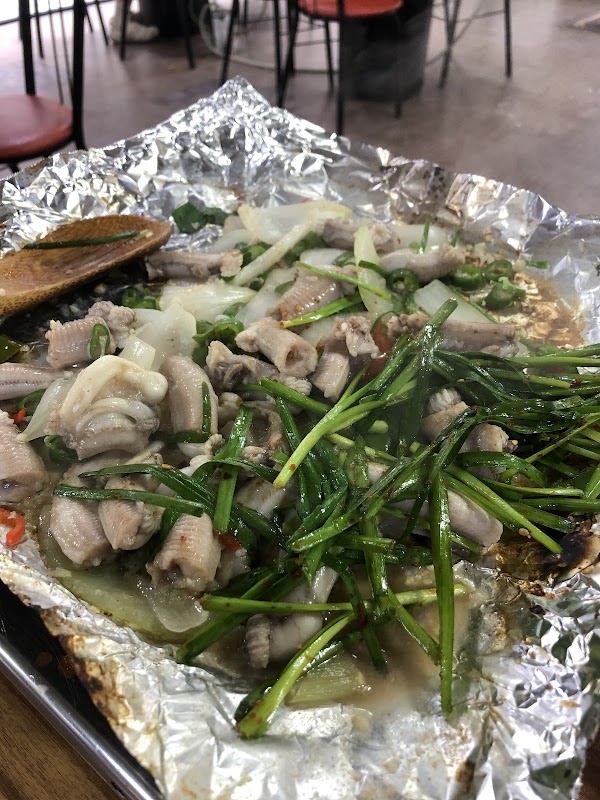
With a single, fluid, and incredibly practiced motion, she stripped away the charred outer layer. Beneath the black ash, a steaming, pearlescent, and remarkably plump flesh emerged.
This was not just labor; it was a demonstration of culinary mastery passed down through generations. Dipping a piece into simple sesame oil and salt, I took my first bite.
The palate-coating smoke of the straw fire hit first—unapologetically rustic, entirely different from the delicate, cold-smoked techniques of French charcuterie. The texture was incredibly springy, offering a pleasant resistance to the tooth, followed by a deep, rich, and clean savoriness. It was a masterclass in how raw heat and a single ingredient can create profound complexity.
Eating Live Octopus (Sannakji) in Korea: A Guide to Texture, Freshness, and Overcoming Culinary Culture Shock
When I first moved to Korea years ago, the sight of *sannakji* (live octopus) writhing on a plate was undeniably intimidating. Even as a Frenchman accustomed to eating escargot and frog legs, the concept of consuming an ingredient while its nerves were still highly active was a major psychological hurdle.
But today, as someone deeply integrated into the Korean culinary landscape, I view this dish as the ultimate testament to freshness. The active movement is not a gimmick; it is proof of an ingredient at its absolute peak, untouched by freezing or prolonged storage.
Wrangling a piece with my chopsticks, I dipped it in sesame oil and brought it to my mouth. The immediate sensation is entirely tactile. The small suction cups cling to the tongue and palate, creating a physical engagement with the food that transcends taste and smell.
The flavor itself is incredibly clean and oceanic, highlighted by the rich nuttiness of the toasted sesame oil. It is a dish that challenges our conventional definitions of dining, expanding gastronomy into the realm of pure texture and touch.
Introducing a Parisian Gourmet to Sannakji: Overcoming Cultural Culinary Barriers
This experience brought back memories of last autumn when my close friend Pierre, a self-proclaimed gourmet from Paris, came to visit me in Busan.
Pierre, who prided himself on eating raw oysters from the coast of Brittany, looked visibly pale when the plate of vigorously moving octopus was set down. He summoned the courage to pick up a piece, but a particularly active tentacle crawled up his chopstick and clung to his cheek.
He let out a startled gasp, dropping his spoon, which sent the entire table—and the neighboring locals—into fits of laughter.
The *imo* laughed heartily, pouring a shot of local soju and handing it to him. "Drink this first, then try it again! It won't move a muscle after that," she advised warmly.
Taking her advice, Pierre knocked back the shot, swallowed his fears along with the octopus, and was instantly won over by the incredible texture. By the end of the night, we had bridged two very different culinary worlds over a shared plate and a bottle of spirits.
The Chemistry of Soju and Hagfish Pairing: Why Busan’s Daesun Soju is the Perfect Structural Counterpoint
At the center of this culinary experience was Busan's native spirit: Daesun Soju.
While French wine pairing is built on the philosophy of harmony—where the beverage and the food elegantly blend together to create a third, unified flavor—the pairing of Korean hagfish and soju is a beautiful study in contrast. It is an intense, deliberate collision of flavors that cleanses and sharpens the palate.
This is not a drink meant to be swirled in a crystal glass to analyze its subtle bouquet. Its beauty lies in its structural and functional relationship with rich, oily local dishes.
Cleansing the Palate: The Scientific Role of High-Proof Spirits in Rich Meals
As the rich, unctuous fats of the charcoal-grilled hagfish begin to coat the tongue and mute your tastebuds, a chilled shot of Daesun Soju (at roughly 16.5% ABV) completely resets the palate.
The alcohol acts as a highly effective emulsifier, slicing through the heavy lipids and leaving the mouth clean and refreshed. This prepares the palate for the next bite, ensuring that each piece of fish tastes as vivid and impactful as the first.
At the same time, the cold, crisp finish of the spirit acts as a vital counterbalance to the heavy, smoky flavors of the grill.
To be fair, it lacks the complex, aged ester profiles of a fine Cognac or a single malt Scotch. When allowed to warm to room temperature, the artificial sweetness of mass-produced diluted soju can become slightly too prominent. However, when served ice-cold alongside rustic, fire-roasted seafood, its utility is unmatched. It is a pairing designed not for the quiet cellar, but for the loud, vibrant reality of the dining table.
Spicy Marinated Hagfish and Fried Rice: Exploring Korea's 'Sweet-Spicy-Salty' Flavor Profile
Once the natural, smoky profile of the straw-fired version is complete, the meal transitions into the bold, complex world of marinated pan-grilling—the epitome of Korea’s beloved *maep-dan-jjan* (spicy, sweet, and salty) flavor profile.
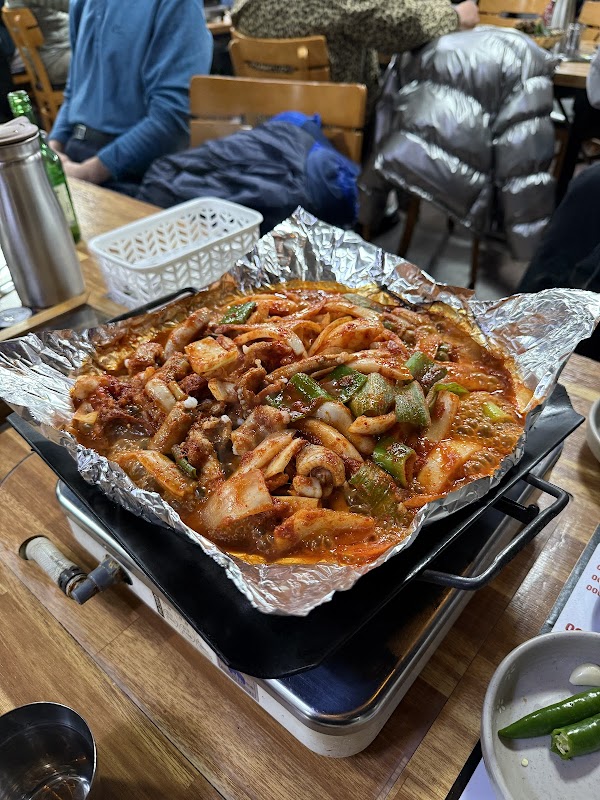
As the thick, gochujang-based red marinade hits the hot iron plate, it undergoes a rapid Maillard reaction, bubbling furiously and filling the air with a deeply caramelized aroma. This intense, vibrant red sauce is something rarely seen as a primary driver in classical French cooking, making it incredibly exciting to analyze.
Even under the weight of such a robust sauce, the firm, muscular texture of the hagfish holds its own, providing a fantastic structural backbone to the dish. And yet, the true highlight of this course is the finale: the fried rice.
The Science of Rice Crust: How Korean Nurungji Mirrors the Structural Joy of Crème Brûlée
The process of taking the remaining savory marinade, combining it with white rice, finely julienned perilla leaves, toasted seaweed nori, and a generous pour of pure sesame oil, then pressing it flat against the blazing iron skillet is pure culinary theater.
Koreans have a genius understanding of how to manipulate starches to achieve the ultimate textural contrast.
As you scrape the bottom of the cast-iron pan with your spoon, the distinctive, crackling sound of the forming crust—known as *nurungji*—is incredibly satisfying.
This experience is structurally identical to using the back of a spoon to shatter the delicate, caramelized sugar lid of a perfectly executed Crème Brûlée. The contrast of the soft, sauce-coated rice on top with the deeply toasted, crunchy crust underneath delivers an incredibly satisfying finish to the meal.
Gijang Hagfish Dining Guide: Actual Menu Prices, Honest Review, and My Personal Verdict
My meal at this historic Gijang establishment was far more than a simple dinner; it was an immersion into the rugged, ocean-facing soul of Busan.
There are no white tablecloths, crystal decanters, or quiet, whispered conversations here. Instead, you are treated to raw culinary honesty, decades of muscle memory from the kitchen, and the warm, unpretentious hospitality of the local staff. It is an absolute must-visit for any serious gastronome visiting South Korea.
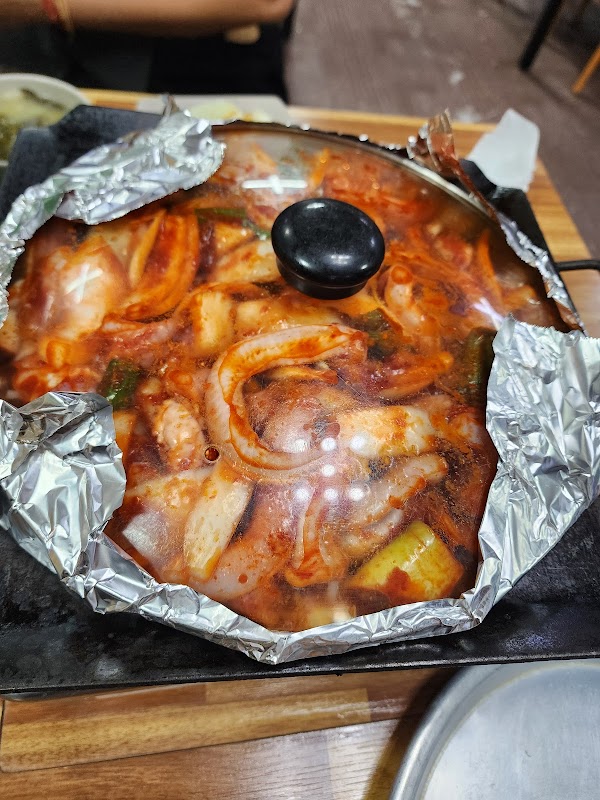
- Live Octopus Hot Pot (Medium): ₩45,000
- Daesun Soju (2 Bottles): ₩10,000
- Udon Noodle Add-on (1 Serving): ₩2,000
- Iron-Plate Fried Rice (2 Servings): ₩4,000
- The Verdict: While a classical French Bouillabaisse offers a slow, simmered, and deeply structured oceanic elegance, this dynamic duo of live octopus and spicy marinated hagfish delivers an immediate, electrifying punch. It is a stunning showcase of texture and fire that ranks among the finest culinary heritage experiences Korea has to offer.