Best Pork Rice Soup in Sasang, Busan (Hapcheon Illyu Dwaeji Gukbap): The Perfect Pairing of Boiled Pork Slices and Soju Praised by a French Gourmet as Superior to Champagne Under the Eiffel Tower

The view from my capsule hotel in Haeundae was markedly different from yesterday. The rain that had been gently misting over the land overnight had transformed into a heavy, relentless downpour. Instead of the gentle warmth of early summer, a damp, humid haze blanketed the city, turning the familiar street silhouettes into something out of a blurred ink-wash painting. For a Frenchman like me—a food lover who has been fully assimilated into the "spicy, sweet, and salty" obsession of Korea—this weather sends only one signal: I need a bowl of soup that is hot, deep, and capable of comforting the weary soul of a traveler.
When I first arrived in Korea, I was taken aback by the pungent scent of pork and the almost aggressive, boiling intensity of the stone pots. Now, at thirty-four, I have become the kind of guy who actively hunts down local gukbap joints. Today’s destination was non-negotiable; it was settled from the start.
Why Hapcheon Illyu Dwaeji Gukbap is a Must-Visit in Busan Sasang
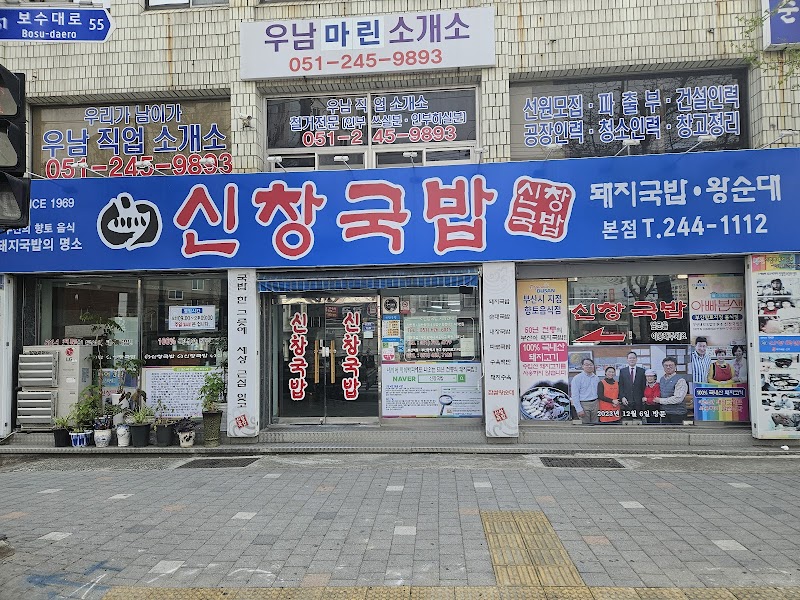
Sasang is the gateway to Busan. It is where the Gimhae International Airport and the intercity bus terminal converge—the literal point where countless journeys begin and end. Right at the heart of that chaotic intersection stands a massive yellow sign, acting like a lighthouse: "Hapcheon Illyu Dwaeji Gukbap." The area around the entrance operates in a kind of "organized chaos." A row of travel suitcases lined up against the wall, as if by silent agreement, serves as a testament that this isn’t just a restaurant; it’s an essential part of the itinerary. Seeing that lineup of luggage, I couldn't help but think of a modern art installation at the Centre Pompidou. This place is a melting pot of emotions, where the excitement and exhaustion of travel collide.
As I walked through the door, my glasses instantly fogged up. The air was thick with the intense heat and the deep, savory aroma of pork bone broth bubbling in massive cauldrons 24/7. The dining hall hummed with kinetic energy: servers hustling with stone pots, the clatter of carts, and a symphony of thick local dialects mixed with fragments of foreign languages. It’s a white noise that feels incredibly grounding, reminiscent of a bustling traditional market.
The Science of Garlic: Why Hapcheon Illyu Gukbap Stands Out
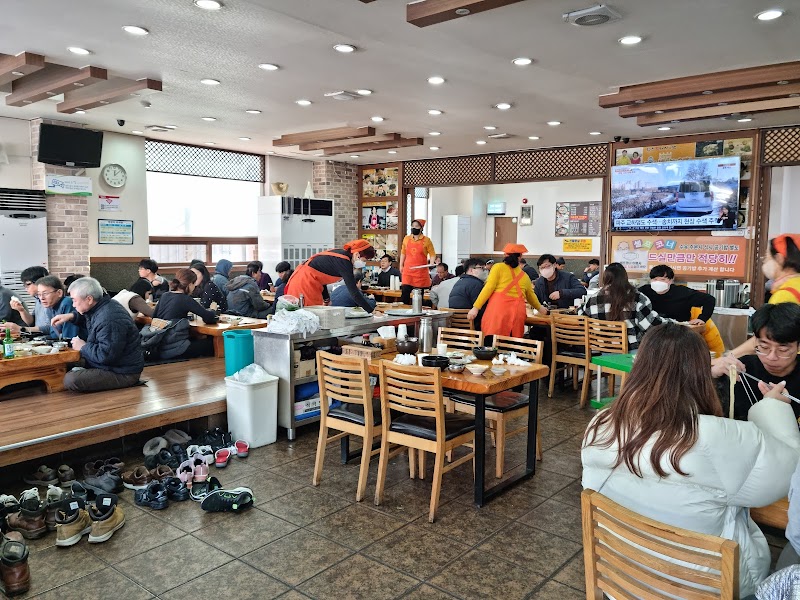
The interior doesn't aim for aesthetic luxury; it is focused entirely on functional efficiency. Heavy wooden tables, tiled floors designed for quick cleaning, and bright fluorescent lights—everything is optimized to serve as many people as possible, as quickly as possible. From behind the semi-open kitchen, you can hear the rhythmic chopping of meat and the constant roar of the stove. It is a sensory appetizer that hits you before the food even touches your table.
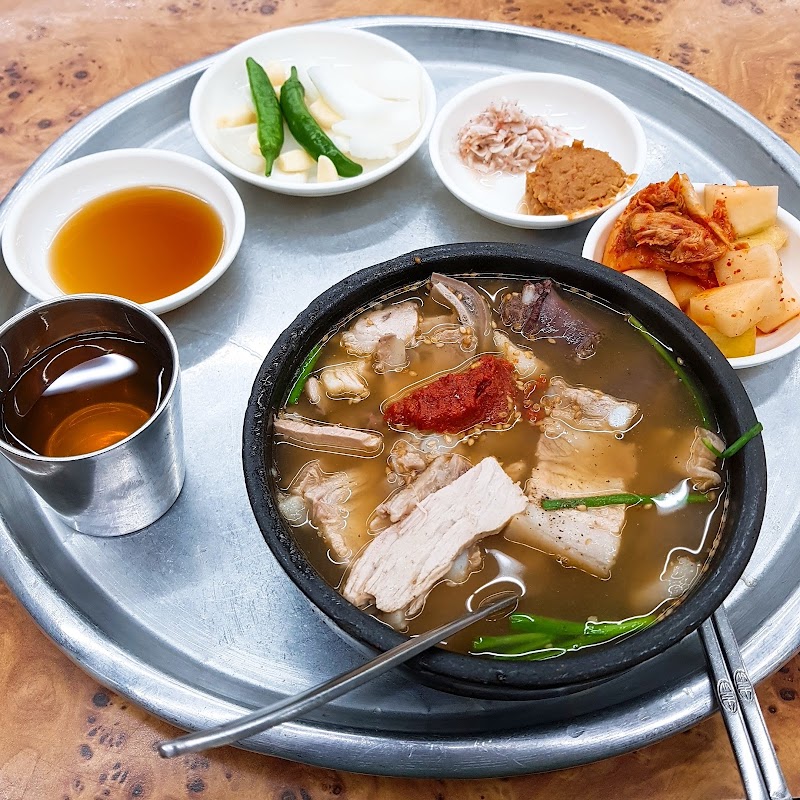
However, the one element that truly dominates the space is the minced raw garlic. While most soup houses rely on the subtle aroma of pork, this place drops a massive spoonful of coarsely chopped raw garlic onto the top of the pot just before serving. It’s a bold move. The sulfurous kick of the garlic perfectly cuts through the richness of the pork, creating a addictive, uniquely Korean balance. In French cuisine, garlic is often a background note, an elusive assistant—but here, it is the lead actor on stage. As the allicin in the garlic breaks down the heavy fats in the broth, it triggers an explosion of umami that feels less like cooking and more like chemistry.
Dwaeji Gukbap Dining Tips: The Art of Taryeom and Ordering
As I waited for my suyuk baekban (boiled pork set), I observed the other tables. Most locals enjoy their soup with the rice already submerged—a technique known as taryeom. This involves repeatedly pouring hot broth over the rice and draining it, ensuring each grain is coated in the essence of the stock. It’s a sophisticated process that stabilizes the temperature and viscosity of the broth, achieving a texture that is biologically comforting. It is a far cry from simply dumping rice into soup. However, as someone who appreciates the purity of a broth, I recommend ordering it "ddaro" (separated)—this gives you control over the rhythm and texture of your own meal.
Perfect Pairing: Soju and Suyuk at a Busan Local Favorite
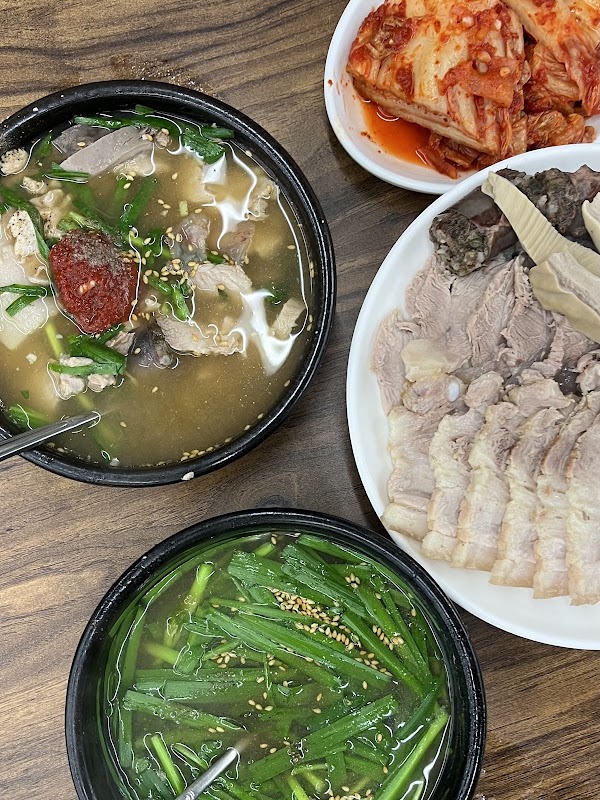
Soon, the steaming pot, a plate of tender pork, and a bottle of ice-cold "Joeun Day" soju arrived. The suyuk baekban is a perfectly designed meal; it allows you to enjoy the deep, complex broth alongside perfectly boiled meat, respecting the integrity of each component. The meat is tender, with a fat-to-lean ratio that makes it melt on the tongue. When that rich, fatty flavor lingers, chasing it with a shot of cold soju acts as a palate cleanser—it is a sharp, authoritative conductor that sets the stage for the next bite. The sensation of the cold alcohol sliding down, followed immediately by the heat of the garlic-infused broth, is the core of why this culture is so addictive. An older gentleman next to me, seeing a foreigner enjoying his soju, smiled and pushed his bowl of seasoned chives my way. "Toss these in," he said, his rough dialect conveying a warmth that felt better than the alcohol.
How to Maximize Your Experience: Noodles and Refills
The true strength of this place lies in its supporting cast. The self-service station is essential—it’s stocked with fresh, spicy kimchi, crisp radish, and unlimited raw garlic and chilies. It reflects a culture of generosity. I also took the suggestion to add udon noodles. The thick noodles soak up the heavy pork broth, creating a second, entirely different dish. If the liquid runs low, you can ask for a refill of the boiling broth for free. Pairing this with extra rice from the self-serve pot allows you to achieve a level of satiety that rivals fine dining, but at a fraction of the cost.
Practical Guide: Avoiding Crowds and Managing the Experience
Can you skip the waiting time at peak hours?
Almost impossible. During lunch (12:00–1:00 PM) and dinner (6:00–8:00 PM), there is always a line. If you want to analyze and savor this meal properly, aim for the "off-hours"—10:00 AM or 3:00–5:00 PM. Regarding parking, the rooftop lot is available, but the ramp is narrow; unless you are a confident driver, stick to the subway or light rail.
Is it a place for quiet conversation?
Definitely not. It is loud, vibrant, and packed with energy. It is the worst place for a business meeting or a date. Accept the noise as part of the "Busan ambient sound" experience.
Will I smell like food afterward?
Yes, intensely. The combination of pork broth and garlic will cling to your clothes and hair. If you are heading to the airport or a meeting immediately after, carry fabric freshener. To me, that scent isn't an inconvenience—it's a badge of honor for having had an excellent meal.
Final Verdict: The Perfect Pit Stop Before the Airport
As I left the restaurant, the rain was still coming down, but my body was fueled and warm. It was a perfect meal. I walked toward the light rail station with a light heart, ready for my flight back to Seoul.
- Suyuk Baekban: 13,000 KRW
- Soju (Joeun Day): 4,500 KRW
- Udon Noodles: 2,000 KRW
- Busan-Gimhae Light Rail: 1,400 KRW
Total: 20,900 KRW
Final Thought: This broth is more violent and grounding than even the finest French consommé. Paired with a cold shot of soju, it offers a mariage that is far more fatal and perfect than any vintage champagne popped under the Eiffel Tower.